
This month's Strategic Spotlight is about seeing things differently, because the biggest strategic shifts rarely come from doing more. They come from changing the lens: noticing what you’ve been missing, reframing the problem, and making choices with clearer judgement (especially under pressure). In my Strategic Spotlight I am sharing the things I have seen this month that have inspired me most in helping reframe and think differently.
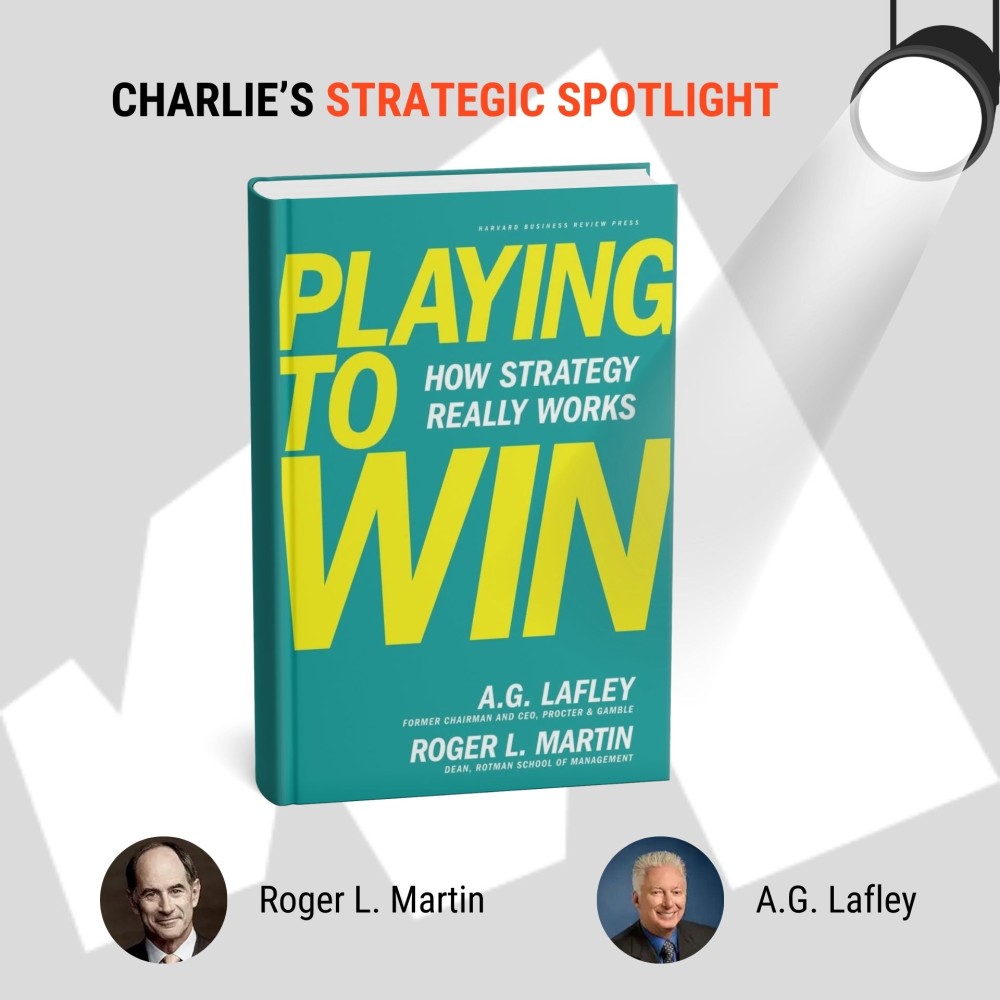
If you want one book that fundamentally changes how you see strategy, it's Playing to Win by Roger Martin and AG Lafley.
I say it’s “on my bookshelf”, but in truth, it rarely makes it back there. It lives on my desk. It’s influenced my thinking for years. I reference Martin’s work multiple times throughout Be More Strategic because it shaped how I think about strategy and choice
One of his most important distinctions is this:
Strategy is not planning.
Most leaders rush to “what next?” - plans, actions, timelines, owners - before they’ve earned the right to plan by answering the strategic questions:
That cascade is not a simple checklist. It’s an integrated set of choices.
And it forces trade-offs.
And trade-offs remove the illusion of control, which is why strategy feels uncomfortable and exposing. Planning, by contrast, feels safe.
But those same choices create clarity and direction.
If you’ve ever wondered why a beautifully organised plan isn’t producing the impact you expected, this book is often where the reset begins.
In my own experience, the problem is not that leaders don’t know these questions.
It’s that under pressure, we default to action before judgement.
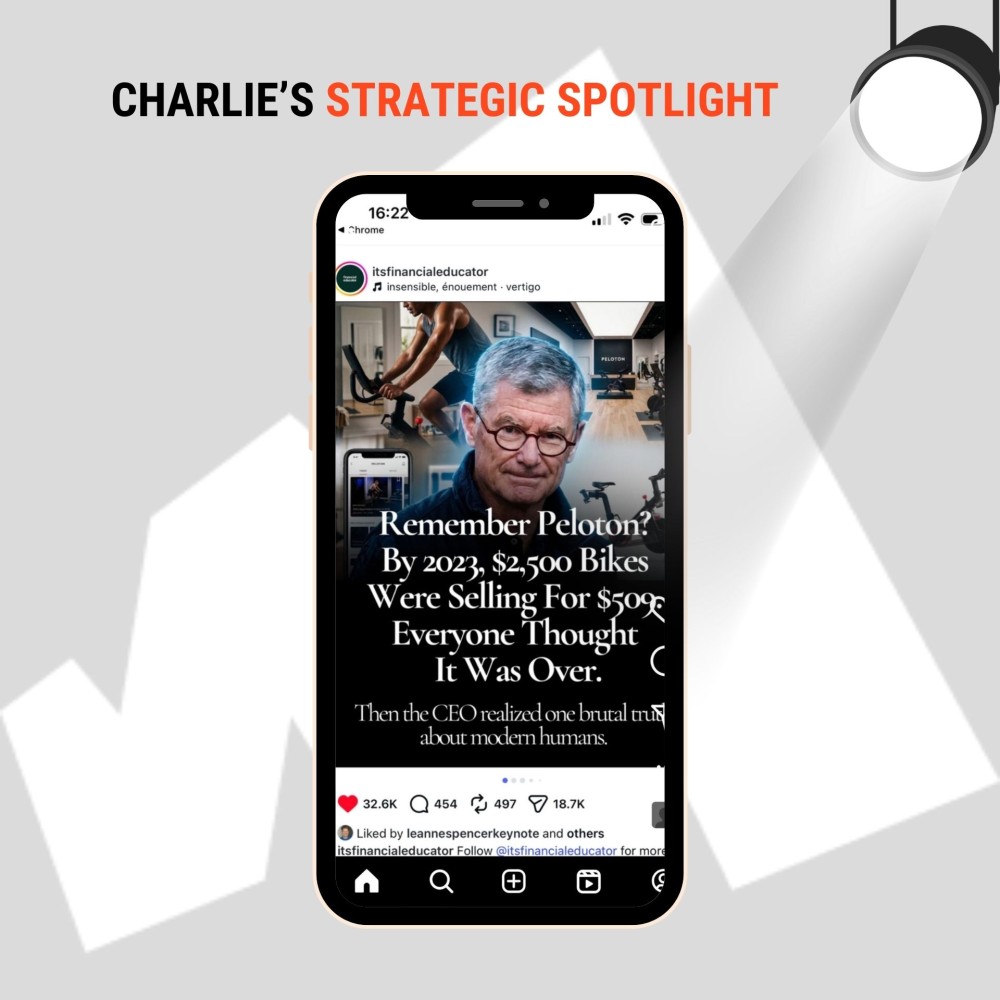
Earlier this month, someone sent me a short breakdown of Peloton’s turnaround. It struck me because it’s a perfect example of what Roger Martin is really getting at.
Strategy is not planning. It’s seeing differently.
During the pandemic, Peloton looked unstoppable. Gyms closed. Living rooms became studios. Revenue surged from under $1bn to over $4bn in two years.
When the world reopened, and demand collapsed, most observers saw a struggling hardware business - discounted bikes, falling subscriptions, a 90% stock crash.
But when Barry McCarthy - former CFO of Netflix and Spotify - took over as CEO, he didn’t see bikes.
He saw behaviour.
The insight was simple and brutal:
The bike wasn’t the product. It was the ticket.
What members were attached to were instructors, rituals, identity and belonging. Community. Not carbon fibre.
So the strategy shifted, away from competing on hardware features and toward strengthening subscription economics, engagement and recurring behaviour.
Within months, Peloton returned to positive free cash flow, over $100M, without launching a miracle new bike.
Strategy hadn’t added complexity. It had reorganised around what was actually driving value.
It’s a reminder that the most powerful strategic move is often not doing more… It’s seeing differently.
Source inspiration: breakdown by @itsfinancialeducator on Instagram, cross-referenced with Peloton financial reporting.
If the Peloton story was about seeing differently… this is about building differently.
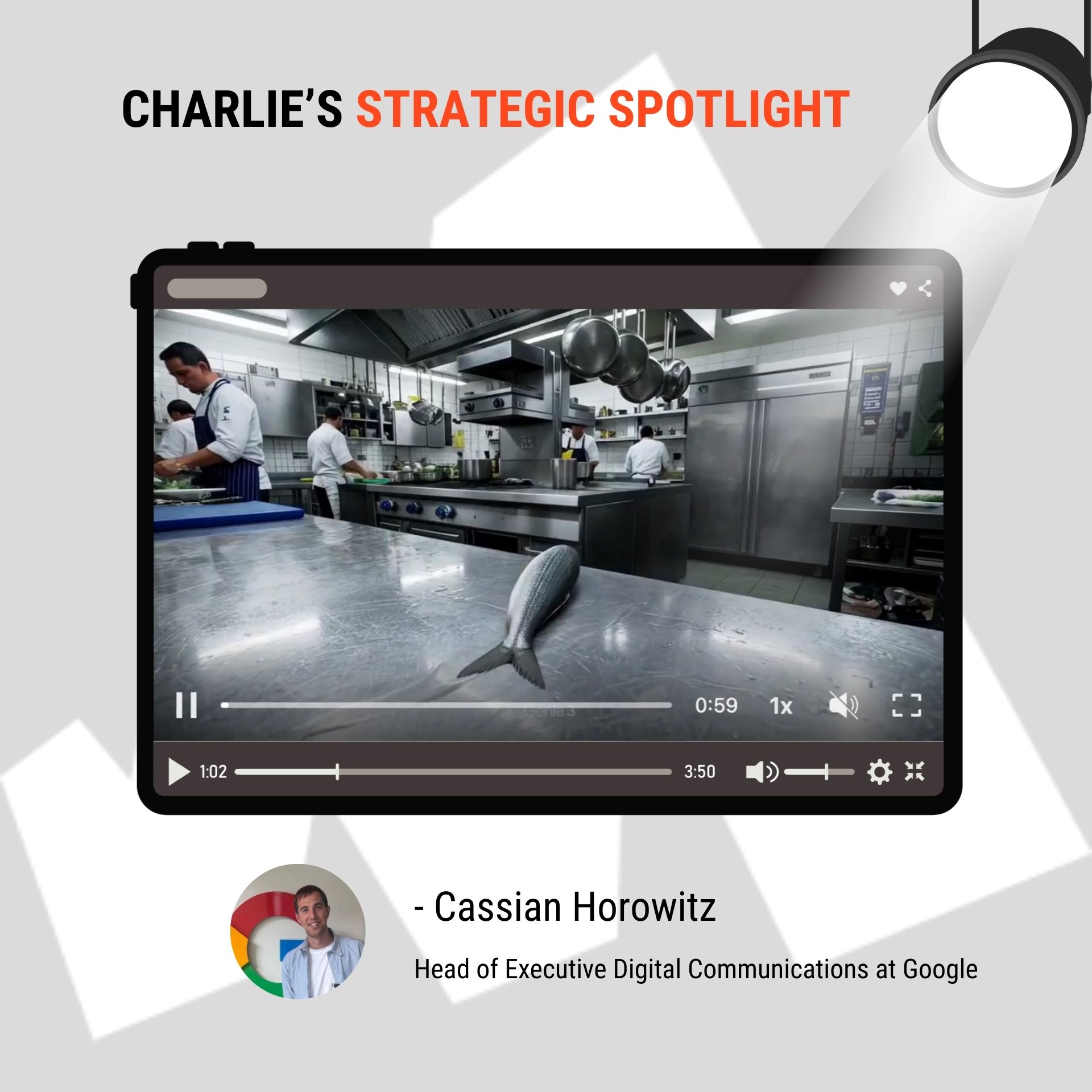
I saw a brilliant clip shared by Cassian Horowitz (Head of Executive Digital Communications at Google ) showcasing work from Google DeepMind.
Their “Genie” model can generate a real-time, explorable 3D environment from a text prompt, not a video you watch, but a world you move through and interact with.
The demo is surreal and slightly ridiculous: a fish flopping around a professional kitchen while you navigate the space like a game. I immediately grabbed my son so we could explore it together.
It’s playful on the surface.
But the implications are serious.
If strategy is about imagining different futures… Tools like this expand what’s imaginable.
P.S. Apparently, Cassian is now my unofficial scout for future-shaping ideas. Thank you Cassian.
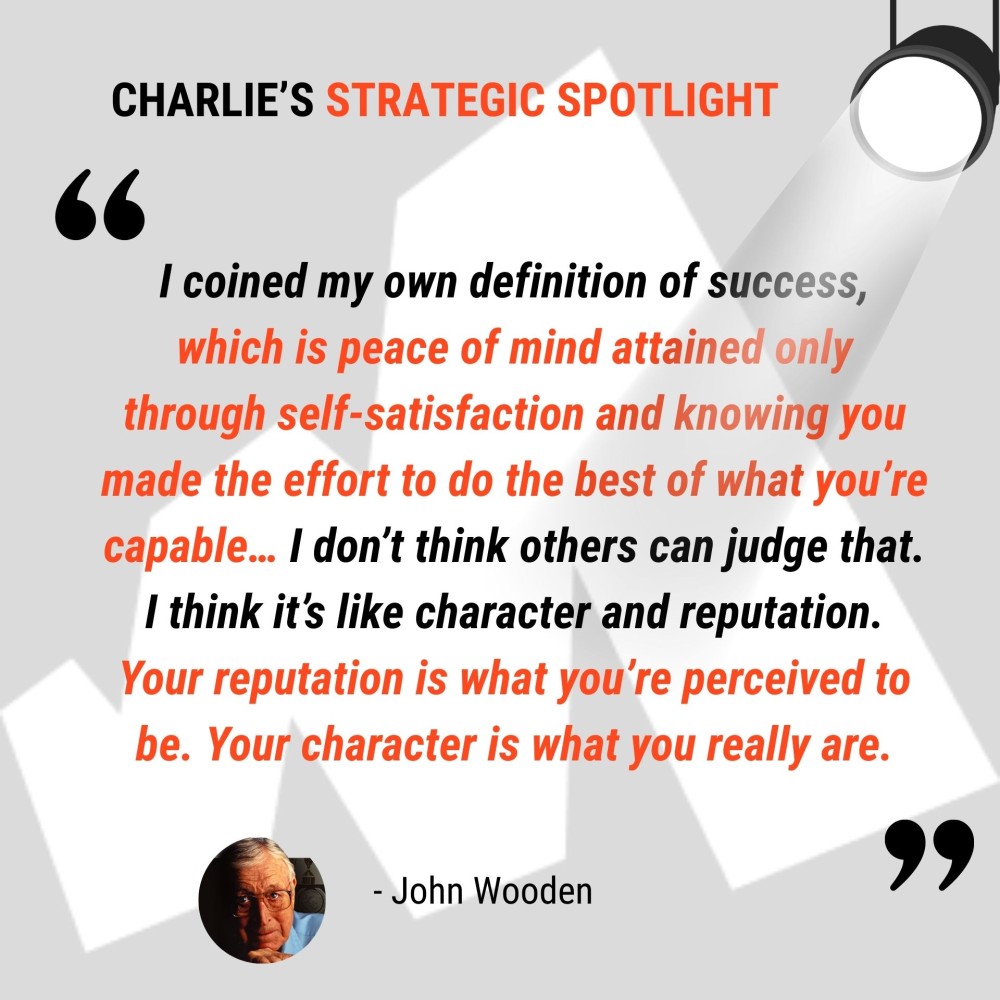
After thinking about strategy, judgement and seeing differently, I was reminded of something from John Wooden that I keep pinned within sight.
He reframed success in a way that cuts through noise:
“I coined my own definition of success, which is peace of mind attained only through self-satisfaction and knowing you made the effort to do the best of what you’re capable… I don’t think others can judge that. I think it’s like character and reputation. Your reputation is what you’re perceived to be. Your character is what you really are.” - John Wooden
What strikes me is the internal standard.
Not revenue.
Not stock price.
Not applause.
Peace of mind from knowing you did the best you were capable of, as a human.
In a world that constantly rewards activity, speed and visibility, that’s a radical definition.
It’s also deeply aligned with strategy.
Because strategic judgement, especially under pressure, is rarely rewarded immediately.
But it is something you know, internally, whether you upheld or abandoned.
If this month’s theme is about seeing differently and strengthening judgement, here’s a practical place to start.
I’ve recently launched a short Strategic Mastery Quiz that shows you which strategic “type” you naturally lean towards.
It takes less than 3 minutes and gives you a snapshot of your overall strategic capability profile - not just how you think, but how you prioritise, decide, influence and lead under pressure.
Why not take it with your team and compare results?
It’s a powerful conversation starter about how you actually work together:
Where your strengths lie
Where blind spots may exist
Where you may need to stretch - or learn from each other
Take the Strategic Mastery Quiz
If you do complete it (especially as a team), I’d genuinely love to hear what surprised you.
.jpg)
If the real work is strengthening judgement - especially under pressure - then it needs practice.
Most leaders are trapped in the 12-month planning loop:
Plan → Deliver → Survive → Repeat.
Stretch your horizon to three years, and everything shifts.
⬇️ Stress drops.
⬆️ Creativity rises.
💡 Options appear.
👏 Decisions improve.
Because time horizon isn’t just a planning tool.
It’s a leadership capability.
I've written a short article on The 12-Month Planning Trap
I’m sharing two free tools to help you put it into practice. This article is just an introduction to this topic. Coming very soon is my new report, 'The Strategic Capability Gap'. Watch this space and make sure you're subscribed to the newsletter (link in the footer) to get the first update when it launches.
As ever, take what’s useful, and if one idea helps you this month, pay it forward and share it with someone who’d benefit.


