
There are some subjects that stay with you for life.
For me, space exploration has always been one of them.
Long before I ever wrote Be More Strategic, long before Mandarin, long before I had language for strategy, leadership, pressure, perspective, or performance, I was fascinated by space exploration. The scale of it. The mystery of it. The ambition of it. The fact that human beings could imagine something so difficult, then organise themselves well enough to actually do it.
I suspect the original LEGO spaceman had something to do with that too. Tiny smile. Air tanks. Blocky rocket optimism. Hard to beat.
That fascination never really left.

If anything, it helps explain the work I do now.
Because strategy, at its best, is partly about perspective. It is about lifting your eyes, widening the frame, resisting the pull of the immediate, and making better choices before pressure shrinks your world. And that is one reason Artemis II landed so strongly with me this month.
NASA's Artemis II mission launched on 1 April 2026, carried four astronauts around the Moon, and splashed down safely on 10 April after a mission of just under ten days. In the process, the crew became the first humans in more than 50 years to travel to the Moon, and they also broke the Apollo 13 distance record to become the farthest humans ever to travel from Earth.
This month’s newsletter is a special edition because there is too much here to ignore.
Not because space is exciting, though it is.
Because it is human.
Because it is ambitious.
Because it is disciplined.
And because it is strategic

One of the themes I kept coming back to this month was this: strategy is about keeping the bigger picture in view, especially when pressure starts to narrow your focus.
That is part of why space exploration has always fascinated me.
There is a phrase for the perspective shift astronauts often describe after seeing Earth from space: the ‘overview effect’. The term was coined by Frank White after interviewing astronauts, but the idea is simple enough. You see Earth differently. Its beauty, its fragility, its scale, and your place within it all land in a new way. NASA has described it through the image of our atmosphere as a thin line holding everything and everyone we know, with the vast inhospitable universe beyond it.
It made me think too of Michael Collins, orbiting the Moon alone during Apollo 11 while Neil Armstrong and Buzz Aldrin were on the surface below. There is a famous Apollo 11 photograph he took of the lunar module with Earth behind it that is often described as containing every living human except the man behind the camera. Hard to imagine a more extraordinary perspective than that. And if you’ve never read it, I highly recommend his wonderful memoir, Carrying the Fire.
Artemis II gave us something of that again this month.

On 6 April 2026, the crew captured NASA’s beautiful ‘Earthset’ image as they flew around the Moon’s far side, a modern echo of Apollo 8’s Earthrise. During that same flyby, they also witnessed a rare total solar eclipse from deep space. Moments like that do not just advance science. They remind us what perspective can do.
That matters because perspective changes judgement.
Most leaders do not struggle because they lack motion. They struggle because they lose altitude. They get dragged into the urgent, the noisy, the local, the political, the immediate. Their field of view narrows. Their decisions follow.
That is true in business. It is true in leadership teams. It is true in our own lives too.
The strategic question is rarely, “Are we busy?”
It is much more often, “Can we still see clearly?”
On the way home, the Artemis II crew held a ship-to-ship call with astronauts aboard the International Space Station (ISS).
NASA described it as a 15-minute conversation between Artemis II and Expedition 74, with Jessica Meir (their friend and colleague) among the astronauts on the ISS. It was one of those deceptively simple moments that said a lot: precision, calm, trust, professionalism, and a very human sense of connection across enormous distance.
For leaders, there is a lesson in that.
High performance is not cold.
It is not noise.
It is not forced intensity.
Very often it looks like calm people, speaking clearly, under pressure, with trust already built.
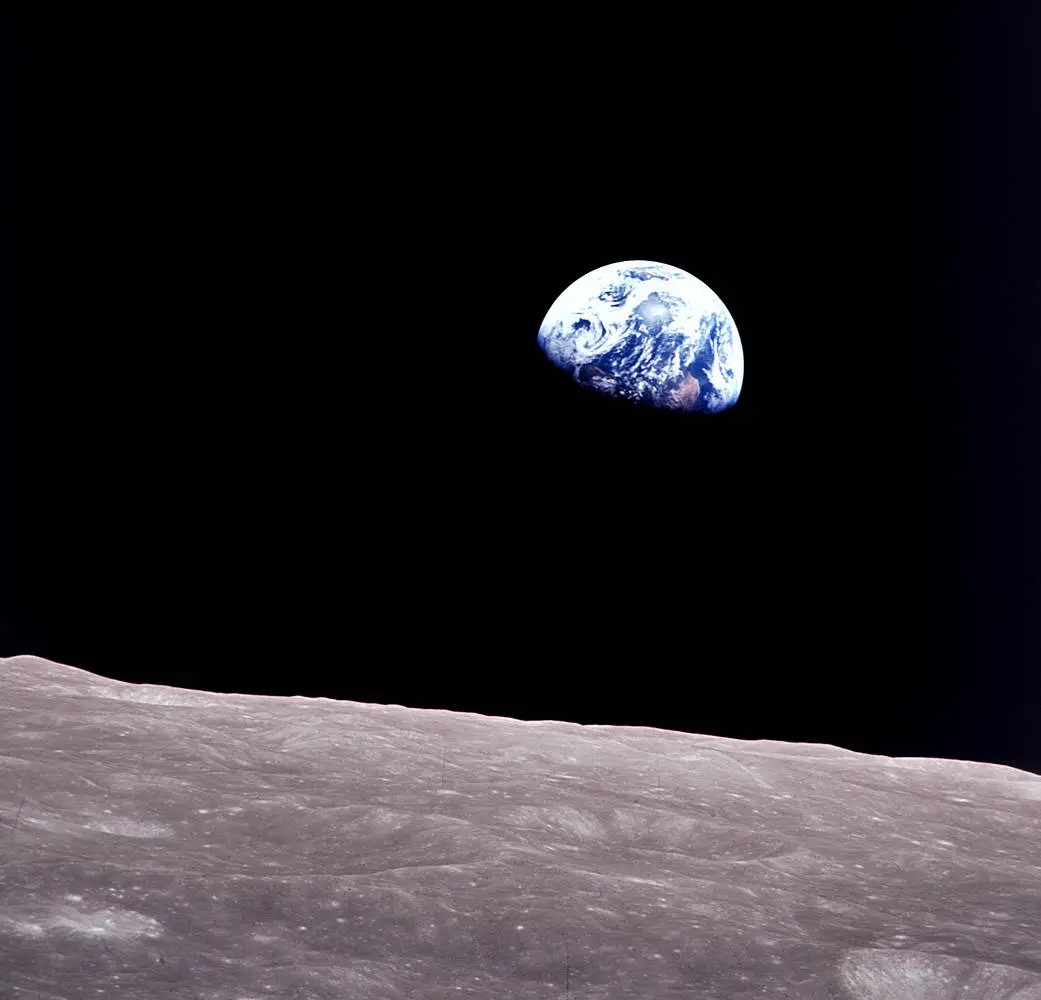
Apollo 8’s Earthrise still has cultural force because it changed how people saw home. Artemis II’s Earthset is different, but it carries the same emotional logic: distance can clarify what proximity distorts.
That also connects to a point John Sills made recently: we often adjust new information so it fits what people already expect to see. It was a lovely reminder that perception is never neutral.
That is not just a communications point. It is a strategy point.
Leaders do this all the time with customer insight, market signals, team feedback, and risk.
We do not just receive reality. We rotate it.

NASA is very open that Artemis is not a one-off stunt. The agency frames it as part of a broader Moon to Mars strategy: return humans to the Moon, build the systems and infrastructure required for sustained exploration, and use that as a pathway to Mars. Artemis also sits inside a wider international framework, with the Artemis Accords now signed by 62 countries.
That matters.
Because it shows that strategy is not just a big goal. It is a set of choices about direction, time horizon, capability, infrastructure, and who you build with.
That is also where the China contrast becomes useful. China’s lunar strategy has been built around its International Lunar Research Station initiative, developed with Russia and supported by a formal roadmap and partnership guide.
In broad terms:
Artemis looks like a wide, alliance-based coalition built around shared principles and interoperability.
China’s approach looks more state-led, centrally directed, and infrastructure-first.
Different strategies. Different models. Different ways of turning intent into reality.
That, to me, is part of what makes this so interesting.
Space is back on the strategic agenda because it is about capability, alliances, industry, talent, engineering, and time horizons that stretch far beyond a quarter.
In other words: serious strategy.
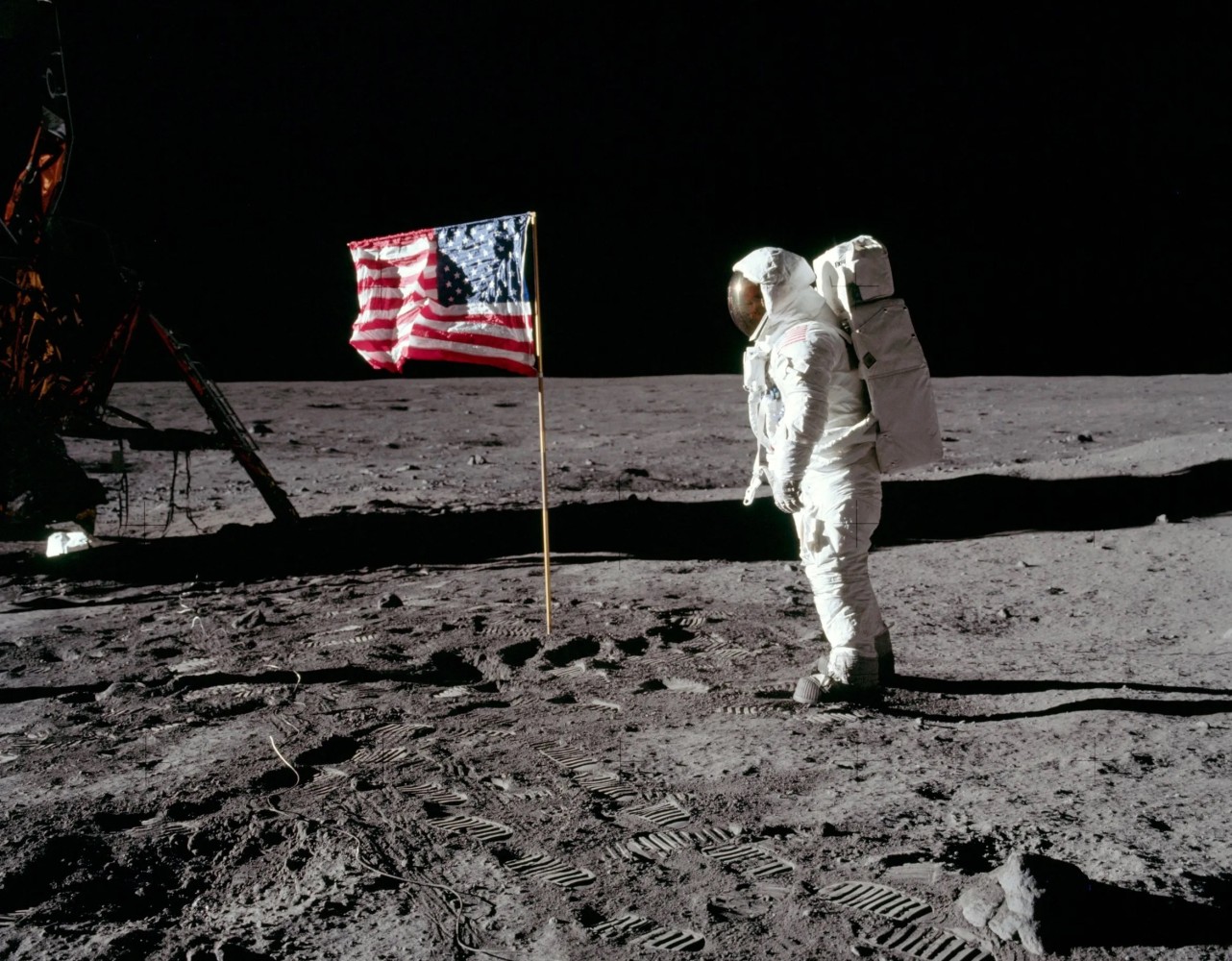
If Artemis II was the emotional reminder, Apollo remains the operating manual.
I went back this month to NASA’s Apollo: A Retrospective Analysis. What is striking is how little of it reads like mythology and how much of it reads like disciplined organisational practice. NASA’s own framing points to design principles stressing simplicity, testing, crew procedures and simulation, flight control, anomaly management, trajectory control, and “flexible yet disciplined mission planning.”
That phrase alone is worth sitting with:
Flexible yet disciplined.
Not rigid.
Not chaotic.
Both.
There was another Apollo idea I loved too: the so-called 10 percent rule. NASA’s retrospective describes the compromise that emerged during Apollo as keeping enough in-house expertise to properly oversee contractors and protect programme quality.
That is gold, and it translates far beyond space.
Too many organisations outsource the hard thinking, sometimes now to consultants, sometimes to AI, and then wonder why strategy never truly sticks.
They buy research.
They borrow frameworks.
They import language.
But they do not build enough internal capability to think, challenge, judge, adapt, and decide for themselves.
Apollo’s lesson was not “do everything yourself.”
It was: never outsource understanding.
That lands very close to the heart of my own work.
Most organisations do not just have a strategy problem. They have a strategic capability problem.
And when capability is weak, strategy stays external, execution becomes reactive, and pressure exposes the gap.
This month, rather than a download, I wanted to leave you with three questions.
Use them individually, with your team, or in your next offsite.

1. Where do we need more overview?
Where have we become too close to the problem?
What are we no longer seeing because we are too deep in the operational detail?
What would become obvious if we looked at this from 30,000 feet instead of 3 feet?
2. What are we rotating to fit our existing beliefs?
Which customer signals, team feedback, risks, or external shifts are we quietly reinterpreting because the raw, honest version would be inconvenient?
Where are we smoothing the edges off reality?

3. Are we building enough in-house strategic capability?
Apollo’s 10 percent rule is a useful challenge.
What proportion of your time, energy, and investment is going into building the internal judgement, communication, decision quality, and strategic maturity of your own people?
Not just buying expertise. Building it.
If you wanted a fourth, it would be this:

What would “flexible yet disciplined” look like for us right now?
That may be the best short definition of strategic capability I have seen in a while.
I also invited a client team recently to consider these two questions:
Are we staying the course for the right reasons, or just becoming belligerent?
Are we changing our mind too quickly, or just flip-flopping?
Being strategic often means balancing the two.
This issue is a little different because it sits right at the intersection of a lifelong fascination and the work I do now.

I have loved space exploration since I was a young child. Not casually. Properly. The missions. The systems. The human stories. The photographs. The sense of scale. The mix of courage and procedure. The engineering. The teamwork. The sheer ambition of building and flying something as enormous as the Space Launch System. NASA describes SLS as the only rocket capable of sending Orion, astronauts, and cargo directly to the Moon in a single launch. And when you have stood near these vehicles and seen them with your own eyes, the scale is almost hard to process.
But more than “space” itself, I think what has always gripped me is the human endeavour of it all.
The bravery.
The teamwork.
The humility.
The preparation.
The communication.
The willingness to push the limits together.
I have been lucky enough over the years to meet three astronauts and hear some of their stories firsthand. What struck me each time was not ego, but humility. Calm. Perspective. A quiet professionalism. That says something too.

And then there was the moment on Artemis II that seemed to touch almost everyone who saw it: the crew proposing the name Carroll for an unnamed crater, in honour of Reid Wiseman’s late wife.
In the middle of one of the most technically demanding human endeavours imaginable, there was still room for memory, love, and humanity. That matters.
As I have grown older, I think I have realised why all this still matters so much to me.
Space exploration makes certain truths harder to avoid.
That clarity matters.
That horizons matter.
That preparation matters.
That communication matters.
That trust matters.
That human beings do extraordinary things when imagination is matched by discipline.
And that, under pressure, the quality of our thinking really does matter.
That is the same thread running through: Be More Strategic through my work with leaders and leadership teams, and through the wider Strategic Capability Shift™
Strategy is not just what gets written down in calm moments.
It is what survives contact with reality.
Artemis II felt like a reminder of that.
Not because most of us are planning a lunar mission.
Because most of us are trying to lead through noise, pressure, uncertainty, complexity, and shorter and shorter horizons.
And in that context, the discipline is the same:
See further.
Think clearly.
Stay aligned.
Act with intent.

The Moon has a way of making our usual excuses look small.
That may be one reason I keep coming back to it.
A final couple of notes before I close.
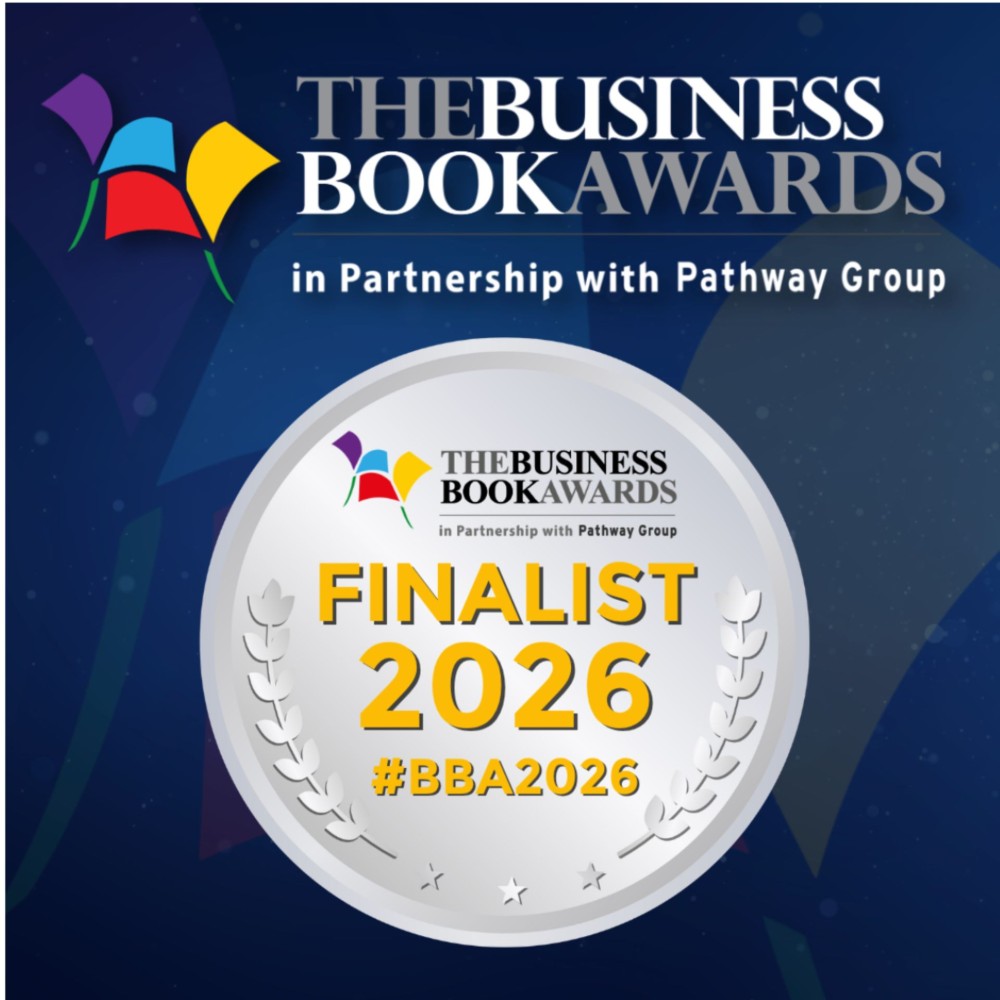
I was delighted this month to learn that Be More Strategic has been shortlisted for the Business Book Awards 2026 in the Leadership category. A real honour, and lovely to see the book in such strong company.
I was also thrilled by the response to the first two Be More Strategic Masterclasses.
Thank you to everyone who joined live, asked thoughtful questions, and shared such generous feedback afterwards.

We’ll be running two more sessions in May. If you’d like to join one, you can book your free place now or if you’re curious about the Strategic Capability Accelerator you can book a short call with me directly.
Best wishes,
Charlie
Founder, Mandarin
Author of Be More Strategic


