
Back in May, I found myself at Claridge's, telling Gareth Southgate that he'd ruined my book launch.
Not deliberately, of course. But when Be More Strategic launched, I discovered Southgate's own book was launching the exact same day, in the exact same category. Months of careful planning with my publisher, undone by the timing of a national treasure (to some!)
So, when Be More Strategic was shortlisted for the Business Book Awards 2026 around the same time, I found myself in a room listening to Southgate talk about leadership and pressure, and I couldn't resist mentioning it. (I also couldn't resist mentioning I pipped him into second place in the bestseller charts. He was extremely graceful about the news!).
It's been that sort of month. Surreal in places. Busy throughout. And full of the kind of conversations, stories, and moments that this newsletter exists to share.
Here's what's inside:
1. Strategic Spotlight - Southgate, disruption theory, and the discipline of not reacting too soon
2. Your Strategic Toolkit - what the science actually says about reading vs listening, and a listening model worth knowing
3. Strategic Mastery - the word that made me brace, and what it taught me about feedback
4. Be More Strategic - masterclasses, a new cohort, Climb26, and a few other things I've been up to
As ever, take what's useful, and pass it on.
Happy reading!
Charlie
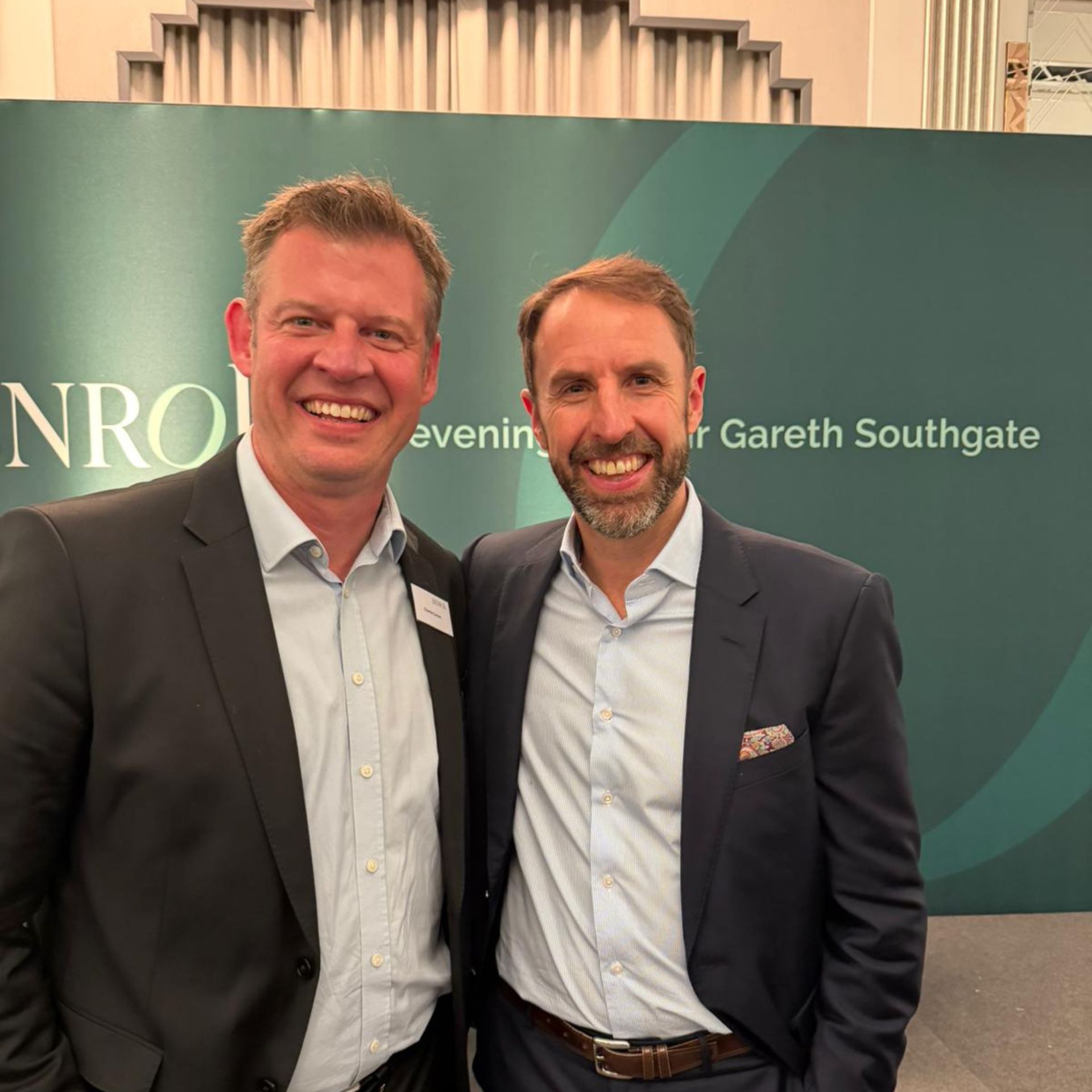
The Claridge's conversation with Gareth Southgate stayed with me for longer than the joke about our clashing launch dates.
What struck me most was how deliberately he manages the environment around a team under pressure. Not by tightening control when things get tense, but by reducing noise, creating psychological safety, and giving people room to perform rather than freeze.
Calm, he made clear, isn't passive. It's created.
I told a similar story on stage at ClimbUK Climb26 this week. During the Cuban Missile Crisis, JFK deliberately slowed his own decision-making down. He resisted the military pressure to react immediately, created space for genuine debate among advisers who disagreed with each other, and let the situation breathe before committing to a course of action. Most historians agree that discipline, the refusal to react prematurely underenormous pressure, is a meaningful part of why the crisis didn't become a war.
There's a leadership skill in that which almost nobody teaches: the ability to sit with uncertainty rather than resolve it too quickly just to feel better. A recent Fast Company piece makes exactly this case, and it's worth five minutes of your time.

A second story this month, from a slightly different direction.
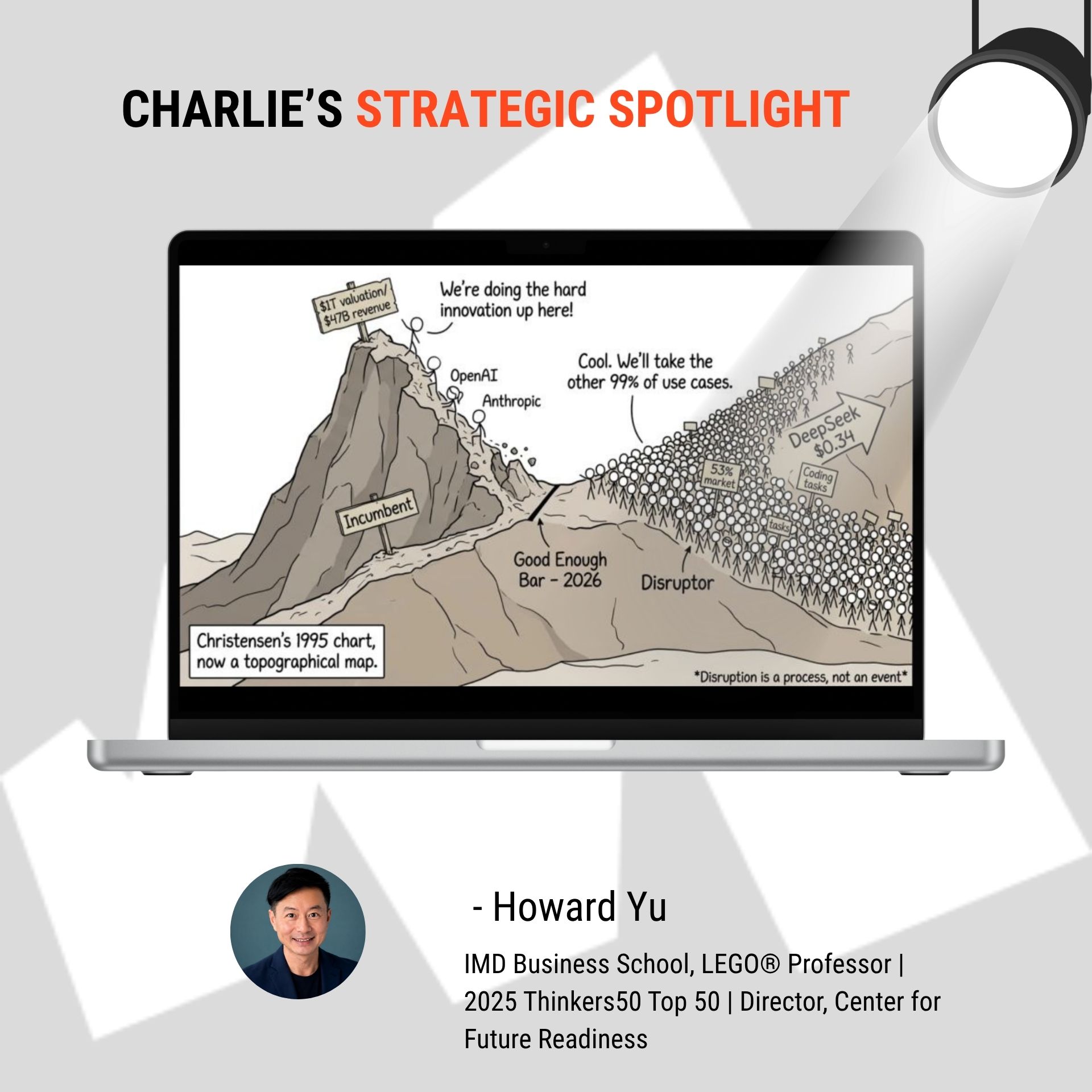
I once met the brilliant Clay Christensen at a book signing very early in my career. His signed book still sits proudly next to my desk. So, a recent post from Howard Yu (Professor at IMD, Thinkers50) caught my eye: a chart Christensen sketched in 1995, used to explain how cheap "good enough" products climb up market and displace incumbents who keep retreating to protect their margins.
Yu applied it to the AI market. Eighteen months ago, Chinese AI models were a rounding error on OpenRouter, the marketplace developers use to shop across models. By early 2026, models like DeepSeek and Qwen were running the majority of the platform's top usage, largely on price: a fraction of the cost of frontier models, for output that's good enough for most jobs.
As Yu points out, Christensen's point was never that disruption is a single dramatic event. It's a process. And it's usually visible long before most leaders are willing to admit what they're looking at.
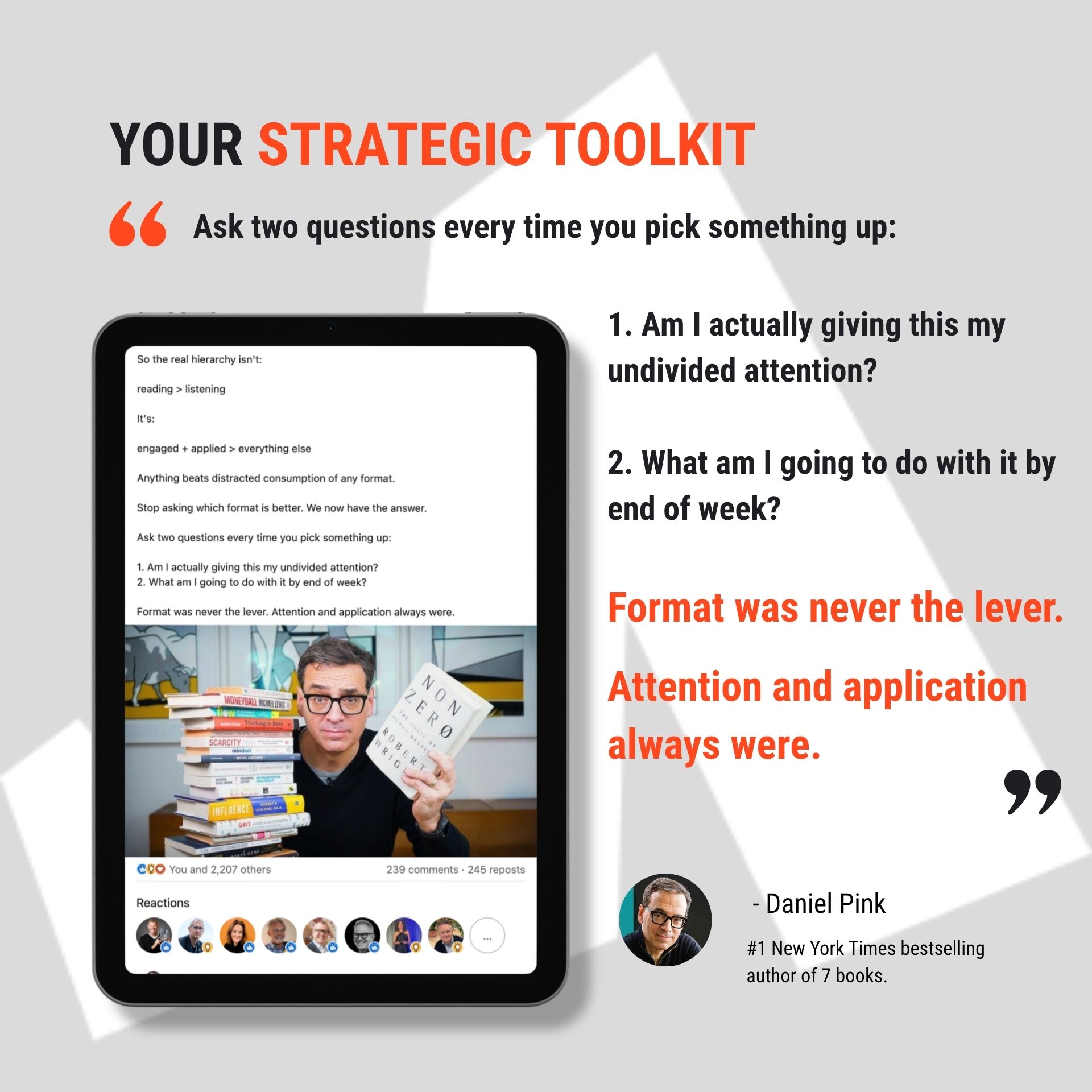
Daniel Pink shared a piece of neuroscience that's worth knowing. Berkeley researchers scanned people's brains while reading a book and while listening to the same book, word for word. The brain's meaning maps came back virtually identical. Your brain doesn't keep separate libraries for "read" and "heard." It encodes both the same way.
So the format was never the real variable. What matters is attention while you consume something, and what you do with it afterwards. Avoice note. A highlight you revisit. A conversation where you try to teach it to someone else.
Two honest questions worth asking next time you pick something up: am I actually giving this my full attention, and what will I do with it by the end of the week?
I first came across Otto Scharmer through his levels of listening video, years before I knew anything else about him. It stuck with me enough that I started using the model myself, and with clients, then went on to read his book, Theory U: Leading from the Future as It Emerges. (I also talk about this in my own book).
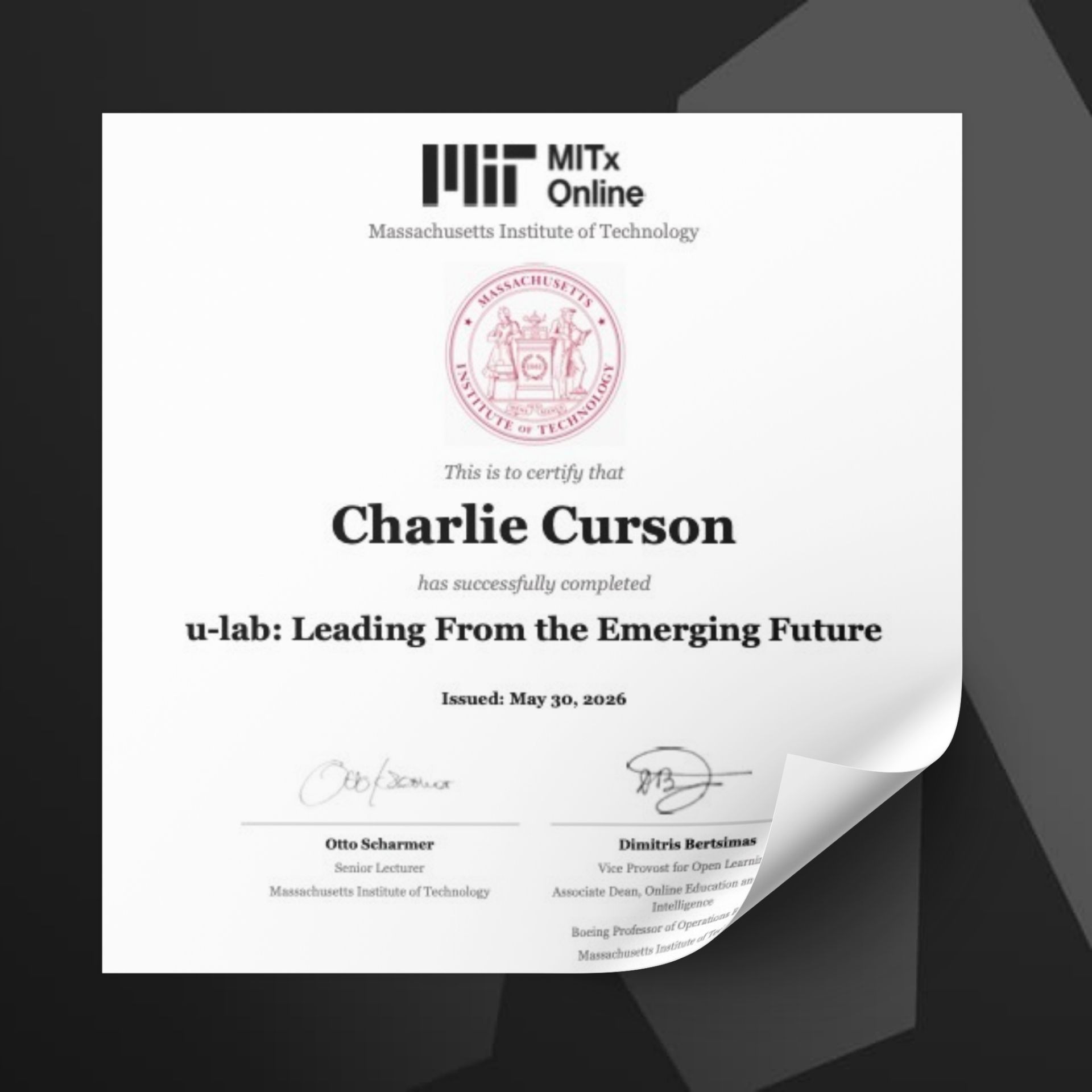
It's therefore been a real pleasure this year to completeu-lab: Leading From the Emerging Future, MIT's signature programme on the subject, studying directly under Scharmer himself.
Alongside the core material, I joined a coaching circle: a small international group of 4 to 5 people, meeting regularly over several months to practise something u-lab calls the "case clinic" method.
Each session, one person brings a live leadership challenge and the group works it through together, using exactly the kind of listening below. It's a brilliant discipline, and I've already started bringing the technique into my own client work.
The model that first hooked me is worth sharing in full, because it's one of the most useful listening tools I know:
Downloading: listening to reconfirm what you already believe. Nothing new gets in.
Factual: paying attention to what's different from what you expected, suspending judgement long enough to actually take it in.
Empathetic: listening through the other person's eyes, using your own feelings to tune into theirs.
Generative: letting go of where you expected the conversation to go, and creating space for something genuinely new to emerge. You leave changed, not just informed.
Most leadership conversations never get past level one. Worth noticing which level you're operating at next time someone disagrees with you.
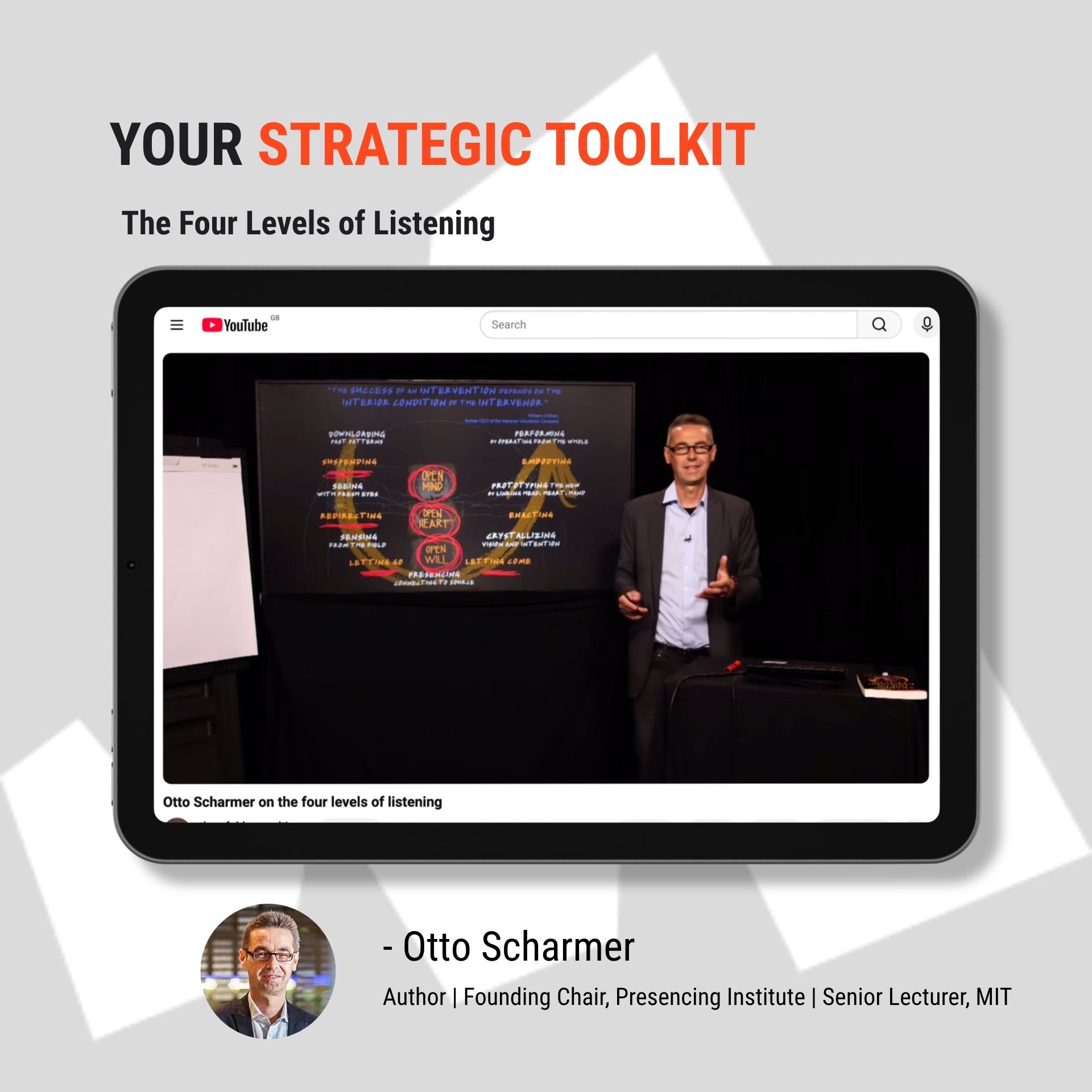
If you want to hear Scharmer explain it himself, the original video is well worth eight minutes.
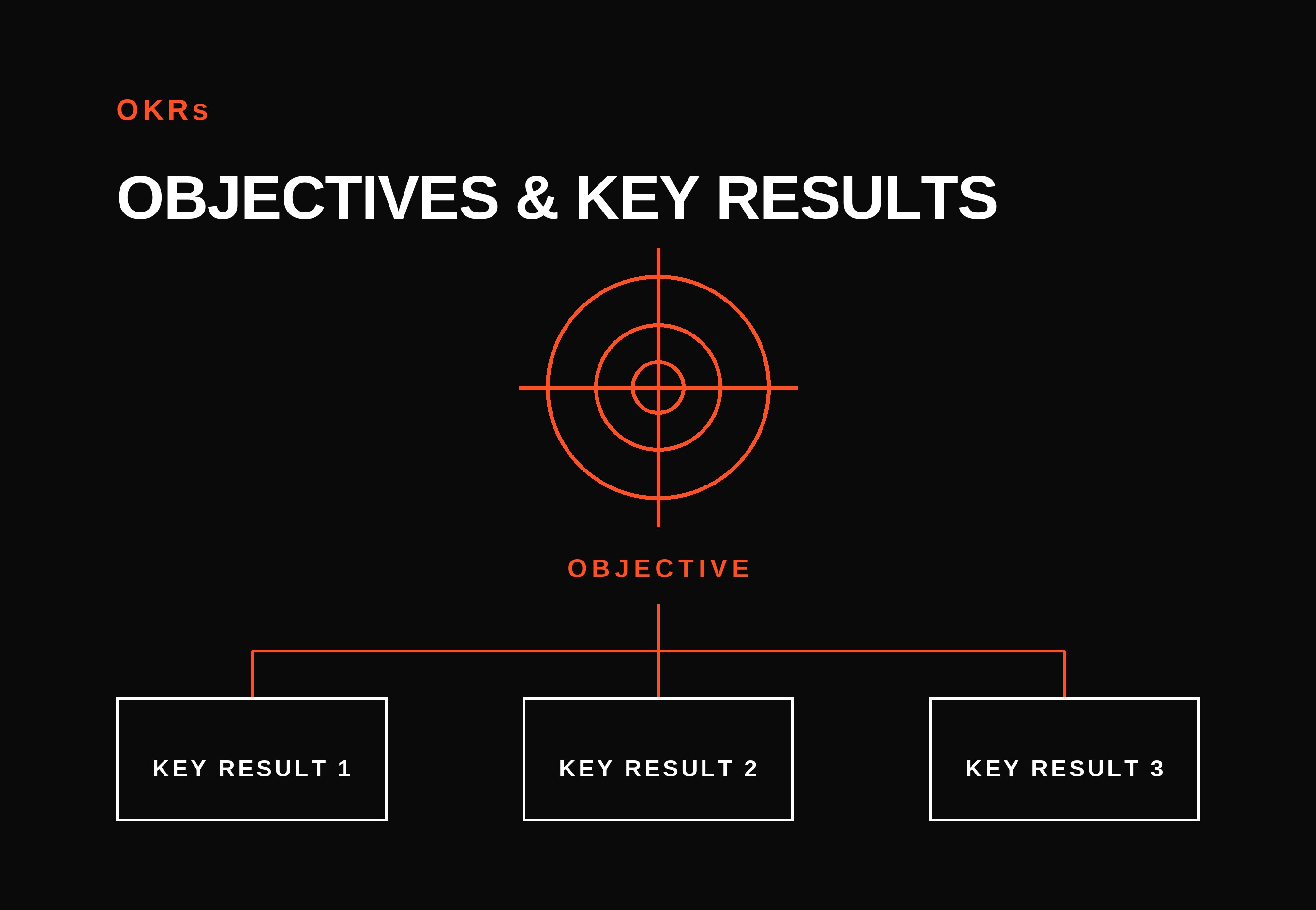
I'm working with a growing number of leadership teams who are embedding OKRs – striving to close the gap between strategy and execution. The more businesses I work with on this, the more convinced I become. Done well, OKRs don't just track progress. They shift behaviour, force prioritisation, and make strategic choices visible in a way most planning documents never do.
An old friend left me a message after one of my masterclasses recently.
"I really enjoyed the session, Charlie. Though…"
It was the "though" that got me. Not because I'm against feedback. I teach it, coach it, write about it. And still, that one word made me brace.
The feedback itself, when it came, was thoughtful and useful. A few ideas for future sessions, offered because the session had been valuable and she wanted the next one to be even better.
A few days later I was running a feedback session with a group of future leaders, and the same tension filled the room. People talked about feedback as positive or negative. They worried about hurting each other. They saved it for formal moments. One person said they'd probably ask AI to help them work out what to say.
That last one stayed with me.
Because for all the talk in organisations about feedback mattering, most people still don't feel comfortable with the reality of it. And yet, when you ask leaders who helped them most in their careers, the pattern is usually the same. They rarely point to the easiest person. They remember the one who challenged them and supported them in equal measure.
We say feedback matters. We can usually name the people who helped us most by being honest with us. And still, in the moment, most of us brace.
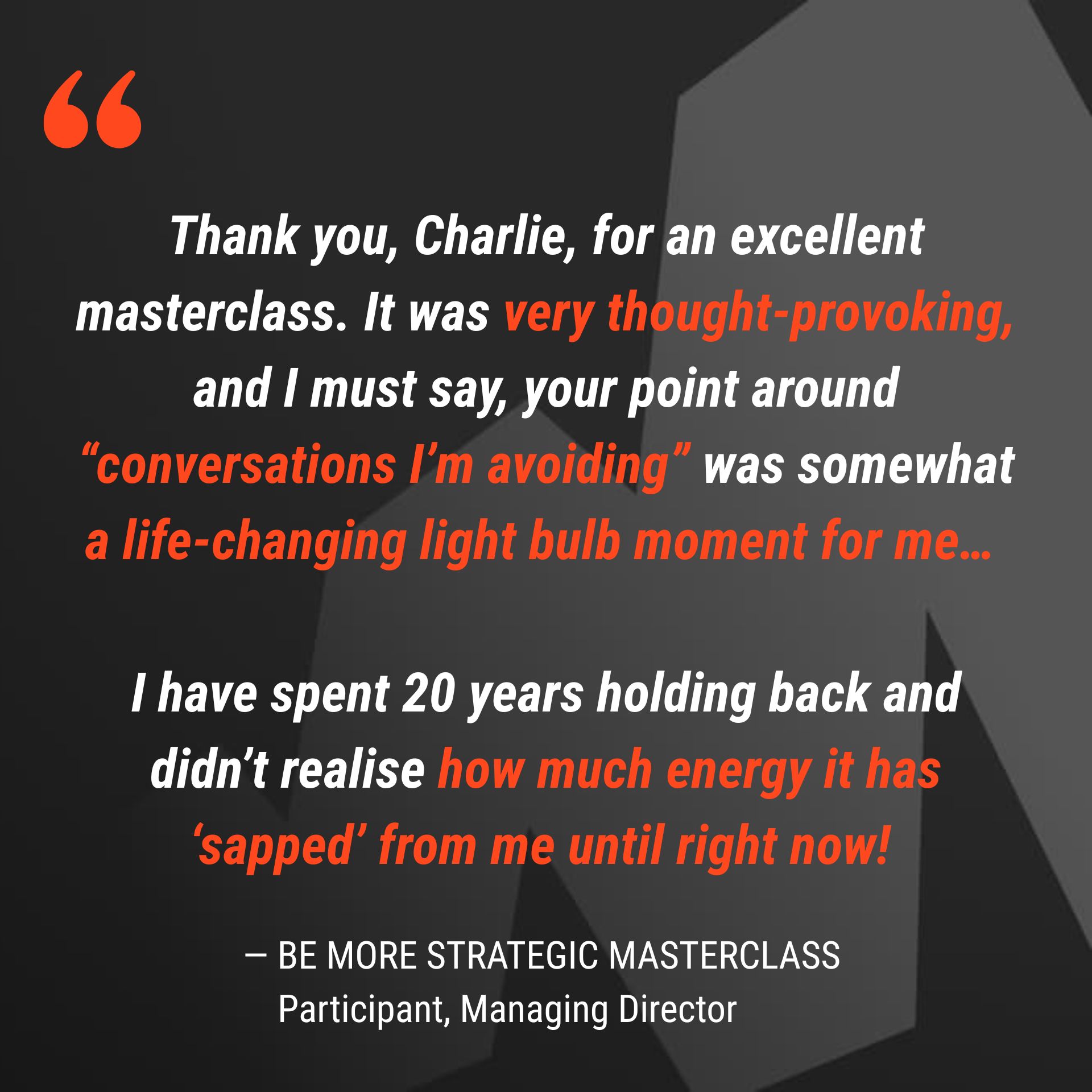
Six masterclasses, and counting
Since the last newsletter I've delivered six Be More Strategic Masterclasses, and the feedback has been some of the best I've had.
If you missed them, the recorded session is available here.
.jpg)
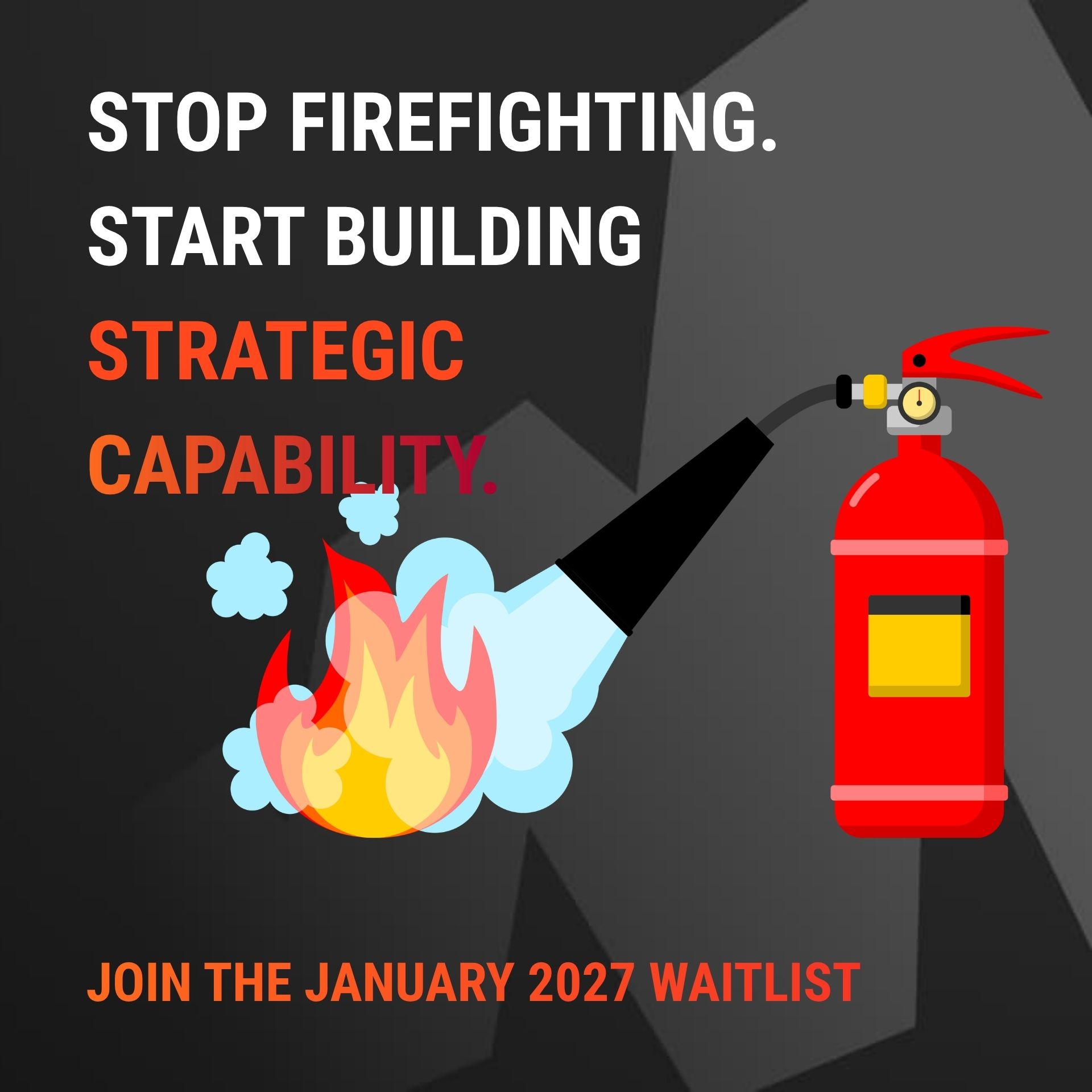
After months of building (and years of planning), the firstcohort of the Strategic Capability Accelerator is finally live. Two masterclasses in, and it's already a brilliant founding group, with people having real moments of clarity, surfacing beliefs they didn't know they were carrying, and starting to say no to things that aren't serving them.
We've only just begun.
Interest in a January 2027 cohort is already building, so we've officially opened the waitlist.
I had the pleasure of being on the main stage at ClimbUK's Climb 2026 in Leeds, alongside a dedicated workshop, "From Reactive to Strategic." It's one of the highlights of my professional calendar, two days of founders, investors, and ecosystem builders, no fluff, no influencers.
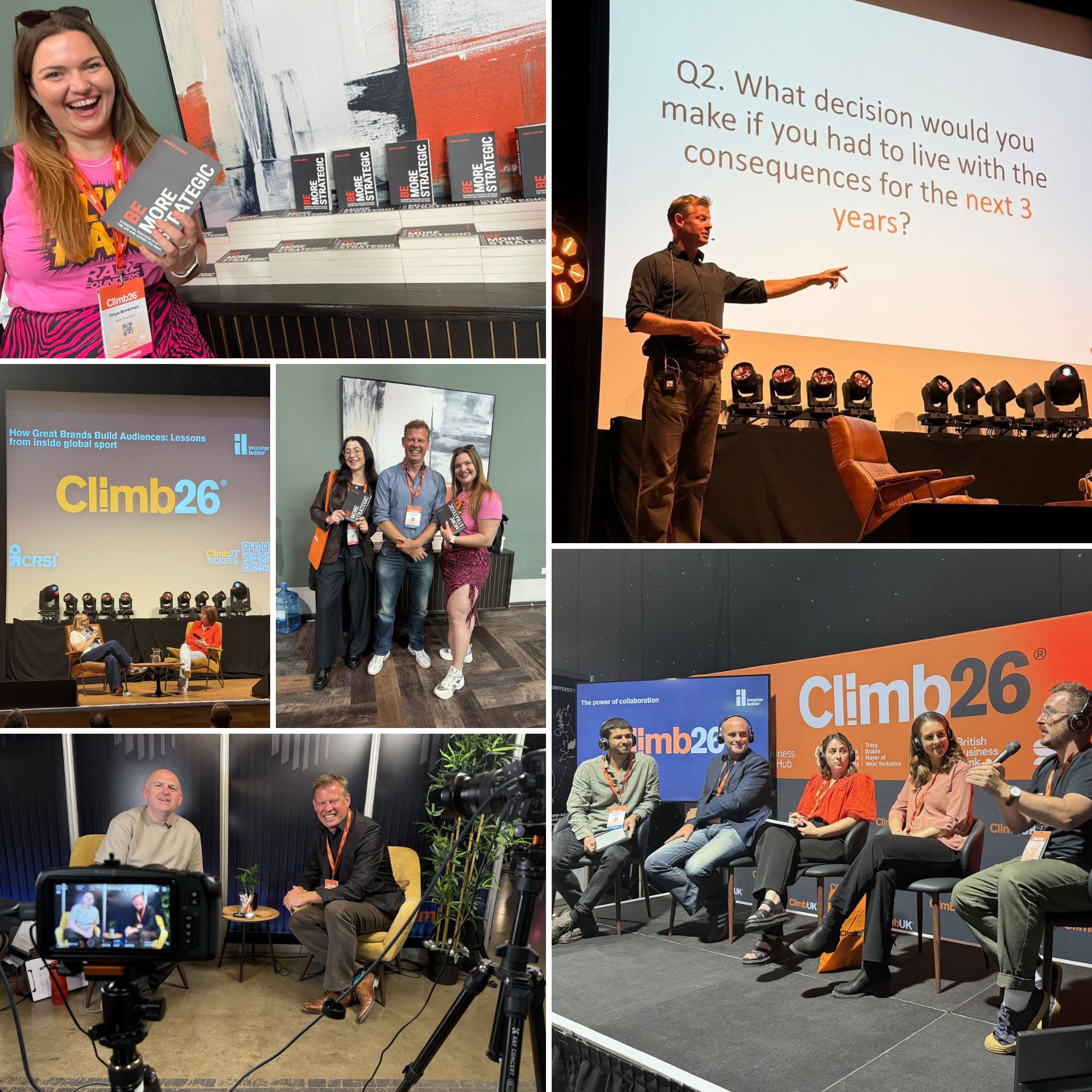
It's part of a wider thread this year: I've been speaking more, on bigger stages, on the topics that matter most to leaders right now. If you're looking for a speaker who can bring real substance to these complex, uncertain times, my speaker profile is here.
I'm excited to be running an in-person event with the brilliant Tom Emery on a topic I keep coming back to with leaders: ego in the executive team, and how it shapes power, decision-making, and culture in the C-suite.
We'll be hosted at BCG's offices in the Midlands, thank you to Aaron Baker and the team there.
Shout if you'd like to know more.
I joined Bob Gentle on his podcast this month, where one line seemed to really land with Bob himself: most leaders don't have a strategy problem, they have a planning problem dressed up as one. Worth a listen, and worth following the wonderful human that is Bob Gentle.

I also recorded a conversation with Jon Rennie for his Deep Leadership podcast, out later this summer. I loved it. Jon's written several excellent books on leadership, well worth your time.
To be honest, I went in nervous about this one, unsure what I'd have to offer him and his audience (given that he spent decades leading the crew of a nuclear submarine), and came out flattered: he told me afterwards that he’d learned a lot, that despite all his leadership experience, strategy hadn’t featured much in his 450+ episodes, and that he'd actually written down a few pointers to share with the businesses he advises.

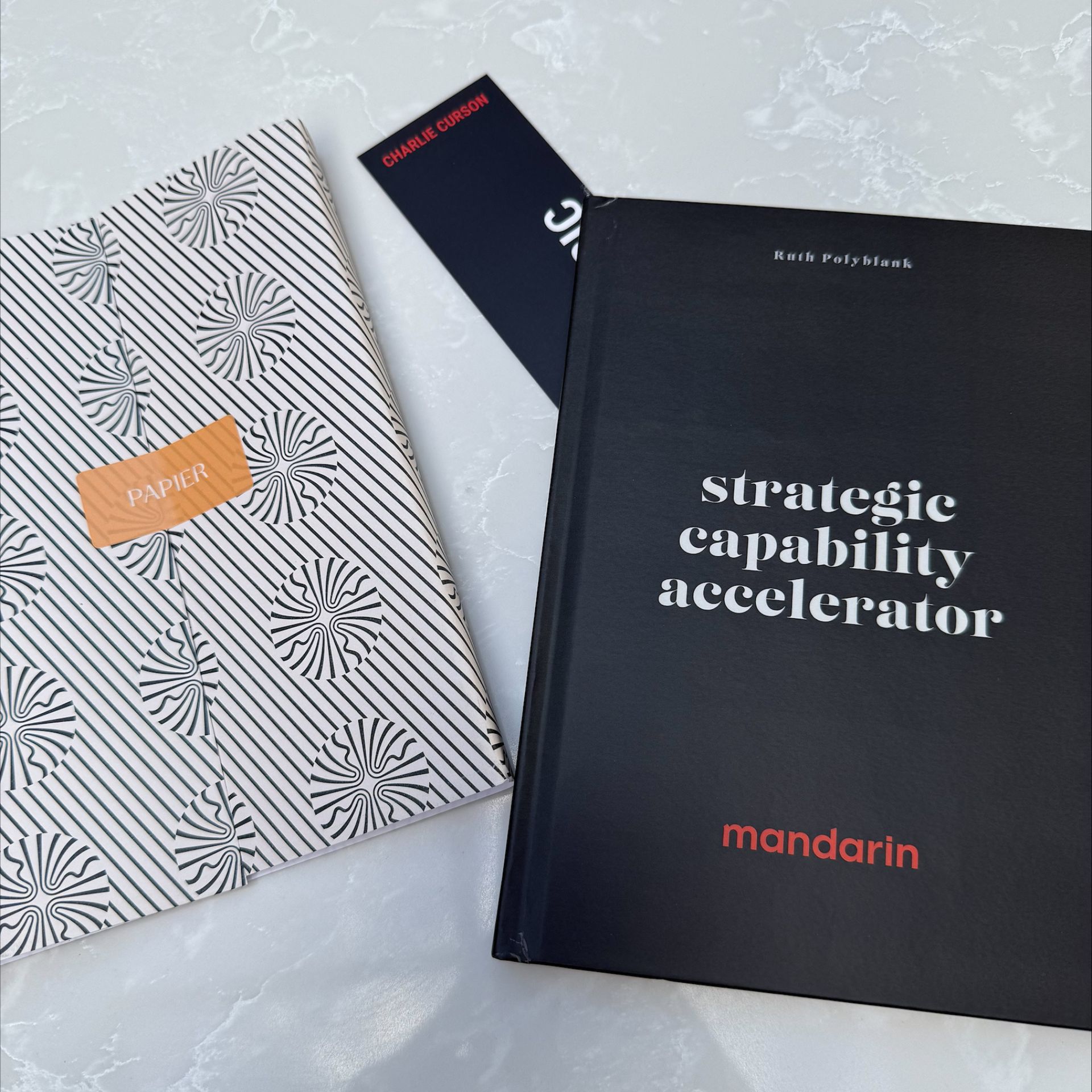
In case you wondered what this picture was doing at the top of this edition! I DJ'd another set in June (still loving it). Woohoo!
But it’s what happened before the set that moved me.
My DJ coach turned up to a recent session holding a copy of Be More Strategic, thumbed through and covered in stickies. He told me it had genuinely changed his life, helped him find his real purpose, and that he's now saying no to things and removing what isn't serving him.
Funny how often that theme keeps showing up this month.


